Replacing an old concrete floor
An old concrete floor with no insulation is replaced in layers: dig out, hardcore, radon barrier, a new slab, insulation boards, then the screed. The screed is the last 35 to 65 mm. For a 75 m² ground floor it costs about €1,650–€2,550 in sand and cement or €1,800–€2,700 in liquid screed. The digging, slab and insulation are priced by the builder.
A cold or damp ground floor, rebuilt in layers with the screed on top.
Free, no obligation. One local screeder prices it, not five.
- €1,650–€2,55075 m² in sand and cement
- €1,800–€2,70075 m² in liquid screed
- 35–65 mmscreed on the new insulation
- 1 dayto screed most ground floors
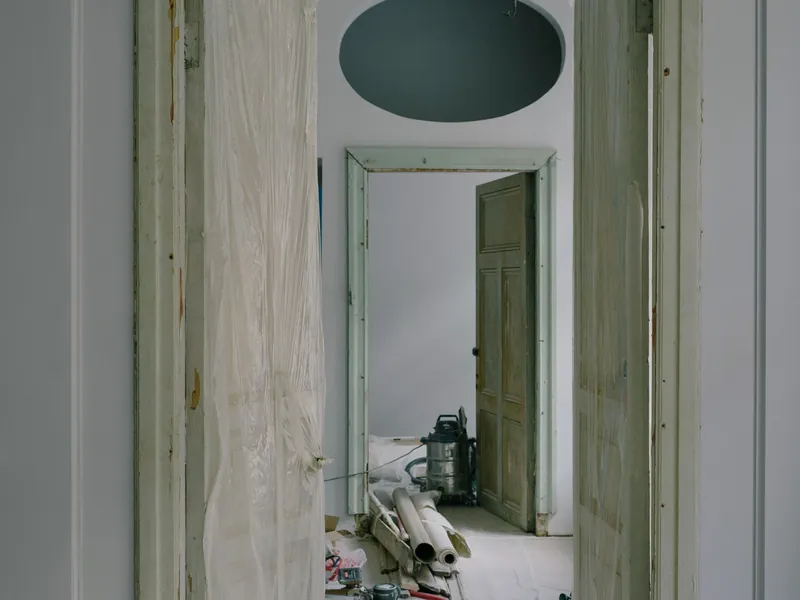
Why old floors get replaced
Houses built before the 1970s were normally built with no insulation under the floor. Some have concrete poured straight onto the ground with no damp-proof sheet. Others have a timber floor hung over a cold, vented gap.
People replace them for three reasons: the floor is cold, the floor is damp, or underfloor heating is going in. A heat pump with underfloor heating needs the floor insulated under the pipes, and that means a new floor.
Price your screed
Four taps and the guide price is on screen. Your name and number come last, and only if you want a local screeder to price the floor properly.
Screed on a replaced ground floor, about 75 m², in sand and cement: €1,650 to €2,550, supplied and laid.
How the price is worked out
It is the area multiplied by our guide rate: €22 to €34 a m² for sand and cement screed supplied and laid, and €24 to €36 a m² for liquid screed poured. One room under 25 m² is not priced by the m², because the pump, the crew and the delivery cost the same for a small floor as for a big one. Insulation, membranes, underfloor heating pipes and any digging out are separate lines. The screeder gives the firm price after seeing the drawings or the floor.
The layers, from the ground up
- Dig out. The old floor and the fill under it come out, to the depth the new layers need.
- Hardcore and blinding. Compacted stone, then sand to protect the membrane.
- Radon barrier. A sealed membrane across the whole floor, lapped up the walls. It is the damp-proof layer too.
- Concrete slab. The structural floor, usually 100 to 150 mm.
- Insulation. Rigid boards, with an upstand round the edge.
- Pipes, if any, then the screed. 35 mm of liquid or 65 mm of sand and cement on the insulation.
More on each layer: what is under the screed.
Height is the thing to settle first
The new floor has to finish at the level of the old one, or the doors, the stairs and the kitchen no longer fit. Every layer takes height, so the dig goes deeper to make room. Where the dig is limited, the screed is where millimetres are saved: liquid screed at 35 mm instead of sand and cement at 65 mm.
Do one room or the whole ground floor? The whole floor in one go is one dig, one pour and one drying time. Room by room means living round it several times over, and a joint in the screed at every doorway.
Read next
 Garage conversion floorsLifting a garage slab to the level of the house, warm and dry.
 Self-build floor screedBoth floors of a new house: when to book it and what has to be finished first.
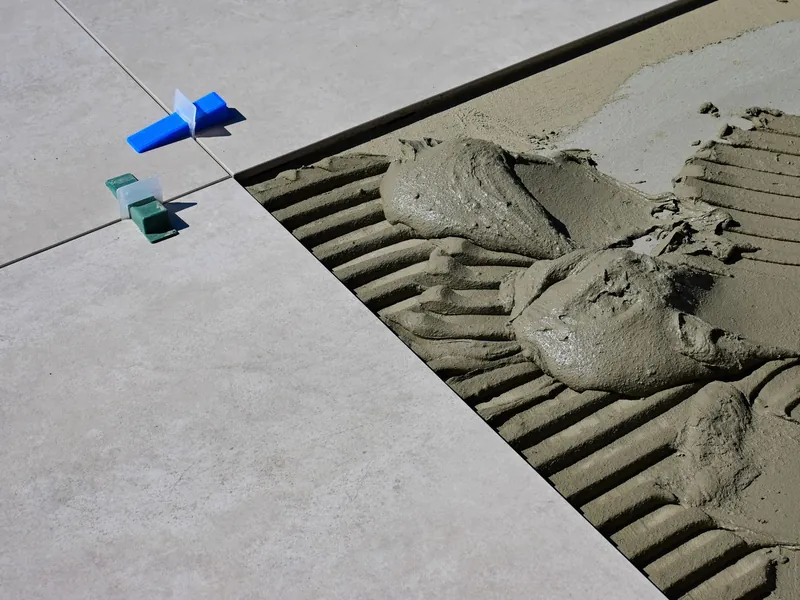 Bathroom and wet room screedScreed laid to a fall of 1 in 80 or steeper, so the water runs to the drain.Getting the house readyNine things to have done before the lorry arrives.When the floor can go downA day for every millimetre at first. Why a 65 mm screed needs about 11 weeks.Screeding one roomWhy a small floor is not priced by the m², and when bags do the job.
Asked before the pour
How much does it cost to re-screed a ground floor?
The screed for a 75 m² ground floor is about €1,650–€2,550 in sand and cement or €1,800–€2,700 in liquid screed. Digging out, the slab and the insulation are separate and cost more than the screed.
Can screed go straight over an old concrete floor?
Yes, if the old slab is sound and dry. A sand and cement screed is stuck to it at 25 to 40 mm. It adds no insulation, so the floor stays cold.
Can I insulate over the old floor and not dig?
If you can lose the height. Insulation boards plus 35 mm of liquid screed raise the floor by 100 mm or more, which means new doors and a step at the stairs.
How long is the house out of use?
The dig, slab and insulation take a week or two. The screed takes a day and you walk on it after a day or two. The floor finish waits for the screed to dry.
Do I need a radon barrier in a replaced floor?
Fit one. The floor is open to the ground once, and that is the time to put a sealed membrane under the slab.
Everything on screed.ie
Screed by job
Before and after the pour

See the price before anyone rings
Tap the job, the area and the screed. If the figure suits, a single screeding contractor in your county rings you and prices the floor properly.