Sand and cement or liquid screed
Use sand and cement where the floor needs a slope, where the job is small, or where a lorry and pump cannot reach. Use liquid screed over underfloor heating, on big open floors and where floor height is tight. Sand and cement is about €22–€34 a m² laid. Liquid is about €24–€36 a m² poured.
The right one depends on the job. Seven jobs, and which screed suits each.
Free, no obligation. One local screeder prices it, not five.
- €22–€34/m²sand and cement, laid
- €24–€36/m²liquid screed, poured
- 65 / 35 mmdepth on insulation
- 80 / 35 daysdrying at that depth
Which one, by job
Wet room or shower floor
- Pick
- Sand and cement
- Why
- It holds a slope. Liquid cannot.
Underfloor heating
- Pick
- Liquid
- Why
- 25 mm over the pipes and no air gaps.
One small room
- Pick
- Sand and cement
- Why
- Mixed on site or from bags. No lorry to pay for.
Whole ground floor
- Pick
- Either
- Why
- Liquid is poured in a morning. Sand and cement takes the day.
Tight floor height
- Pick
- Liquid
- Why
- 35 mm on insulation against 65 mm.
No room for a lorry
- Pick
- Sand and cement
- Why
- A mixer and barrows get in anywhere.
Floor finish needed soon
- Pick
- Liquid
- Why
- Thinner, so it dries sooner.
Price your screed
Four taps and the guide price is on screen. Your name and number come last, and only if you want a local screeder to price the floor properly.
Screed for an extension floor, about 75 m², screed type still open: €1,650 to €2,700, supplied and laid.
How the price is worked out
It is the area multiplied by our guide rate: €22 to €34 a m² for sand and cement screed supplied and laid, and €24 to €36 a m² for liquid screed poured. One room under 25 m² is not priced by the m², because the pump, the crew and the delivery cost the same for a small floor as for a big one. Insulation, membranes, underfloor heating pipes and any digging out are separate lines. The screeder gives the firm price after seeing the drawings or the floor.
Side by side
Sand and cement
- How it goes in
- Mixed nearly dry, spread, packed down and trowelled by hand
- Depth on insulation
- 65 mm
- Flatness
- Depends on the hand that lays it
- Slopes
- Yes
- Area in a day
- A house
- Before tiling
- Brush it clean
Liquid screed
- How it goes in
- Pumped through a hose and levelled with a dappling bar
- Depth on insulation
- 35 mm
- Flatness
- Very flat, it finds its own level
- Slopes
- No
- Area in a day
- Several houses
- Before tiling
- Calcium sulphate types are sanded and primed first
Two kinds of liquid screed
Liquid screed is either cement-based or calcium sulphate, which is also called anhydrite. They pour the same way.
- Calcium sulphate shrinks very little, so it needs few joints. It must not stay wet, so it is not for wet rooms or outside. Its surface is sanded before tiling, and tile adhesive needs a primer on it.
- Cement-based can take damp, needs no sanding and takes ordinary tile adhesive. Follow the maker's sheet for joints and for when the heating goes on.
Tell the tiler which one is down. It changes the primer and the adhesive.
Read next
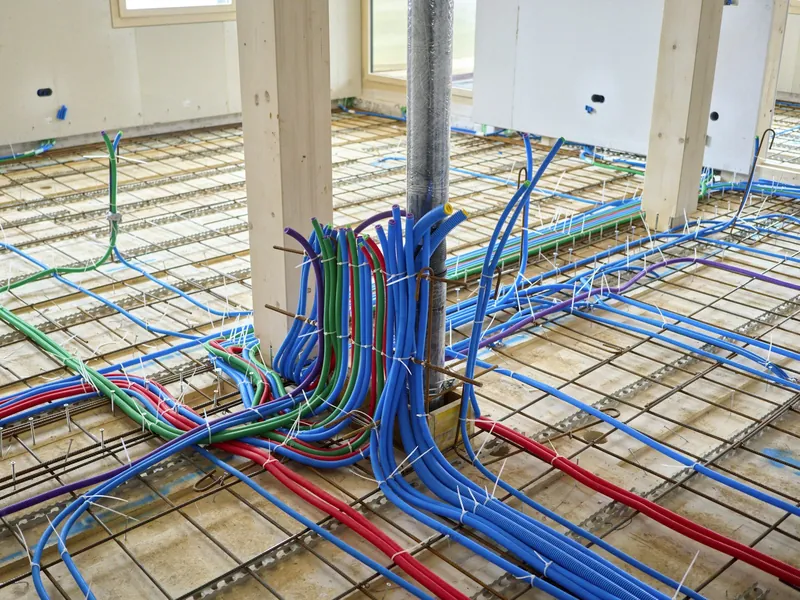 Screed over underfloor heating25 mm over the pipes in liquid screed, and when the heat can go on.
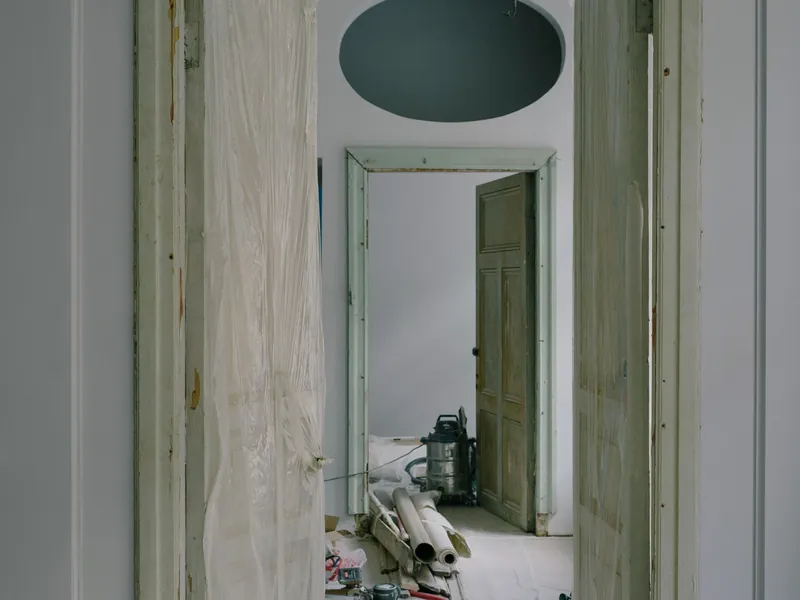 Replacing an old concrete floorDig out, membrane, insulation, then the screed. The order and what each layer costs you in height.
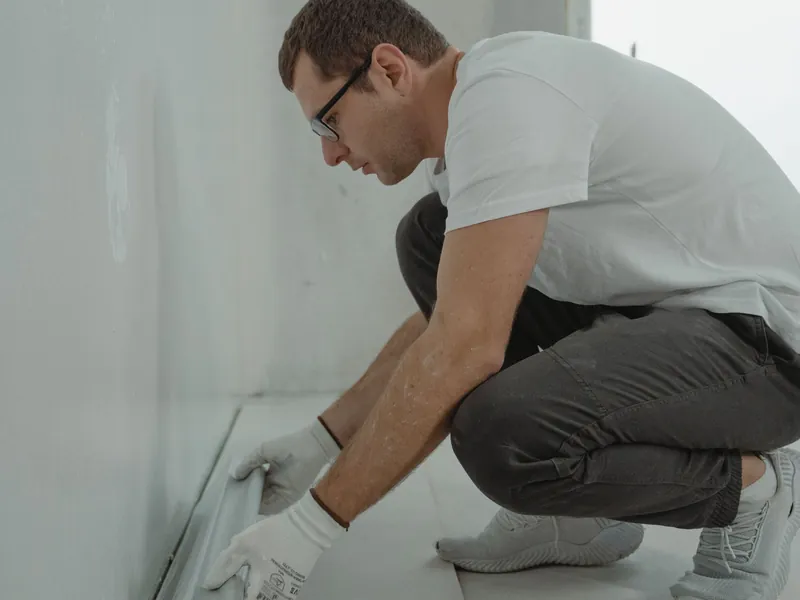 Garage conversion floorsLifting a garage slab to the level of the house, warm and dry.
 When the floor can go downA day for every millimetre at first. Why a 65 mm screed needs about 11 weeks.Screeding one roomWhy a small floor is not priced by the m², and when bags do the job.What is under the screedHardcore, radon barrier, slab, insulation, pipes: the layers in an Irish floor.
Asked before the pour
Is liquid screed dearer than sand and cement?
A little: about €24–€36 a m² against €22–€34. It goes down thinner, which narrows the gap on a big floor.
Which screed is stronger?
Liquid screed is stronger in bending, which is why it can be laid thinner. Both are strong enough for a house when laid to the right depth.
Which screed dries faster?
Liquid, because it is thinner. 35 mm dries in about 35 days and 65 mm of sand and cement in about 80.
Can I tile straight onto liquid screed?
Onto a cement-based one, yes, once it is dry. A calcium sulphate one is sanded and primed first.
Everything on screed.ie
Screed by job
Before and after the pour
See the price before anyone rings
Tap the job, the area and the screed. If the figure suits, a single screeding contractor in your county rings you and prices the floor properly.