When the floor can go down on a new screed
Allow a day for every millimetre for the first 50 mm of sand and cement screed and two days for every millimetre after that. A 65 mm screed needs about 80 days before a floor that minds damp goes on it. Liquid screed dries at a day a millimetre up to 40 mm. You can walk on either after 24 to 48 hours.
Drying time by depth, which finishes can go first and the test that settles it.
Free, no obligation. One local screeder prices it, not five.
- 1 day per mmfor the first 50 mm of sand and cement
- 80 days65 mm of sand and cement
- 60 days50 mm of liquid screed
- 75% RHthe test a cement screed must pass
Drying time by depth
40 mm sand and cement
- Days
- 40 days
- About
- 6 weeks
50 mm sand and cement
- Days
- 50 days
- About
- 7 weeks
65 mm sand and cement
- Days
- 80 days
- About
- 11 weeks
75 mm sand and cement
- Days
- 100 days
- About
- 14 weeks
35 mm liquid screed
- Days
- 35 days
- About
- 5 weeks
50 mm liquid screed
- Days
- 60 days
- About
- 9 weeks
The rule of thumb: a day for every millimetre up to 50 mm of sand and cement, then two days for every millimetre after. For liquid screed the change comes at 40 mm. It assumes a dry, aired room at about 20°C. A cold, closed-up house takes longer.
Price your screed
Four taps and the guide price is on screen. Your name and number come last, and only if you want a local screeder to price the floor properly.
Screed for an extension floor, about 40 m², in liquid screed: €960 to €1,440, supplied and laid.
How the price is worked out
It is the area multiplied by our guide rate: €22 to €34 a m² for sand and cement screed supplied and laid, and €24 to €36 a m² for liquid screed poured. One room under 25 m² is not priced by the m², because the pump, the crew and the delivery cost the same for a small floor as for a big one. Insulation, membranes, underfloor heating pipes and any digging out are separate lines. The screeder gives the firm price after seeing the drawings or the floor.
Which floor finishes can go down first
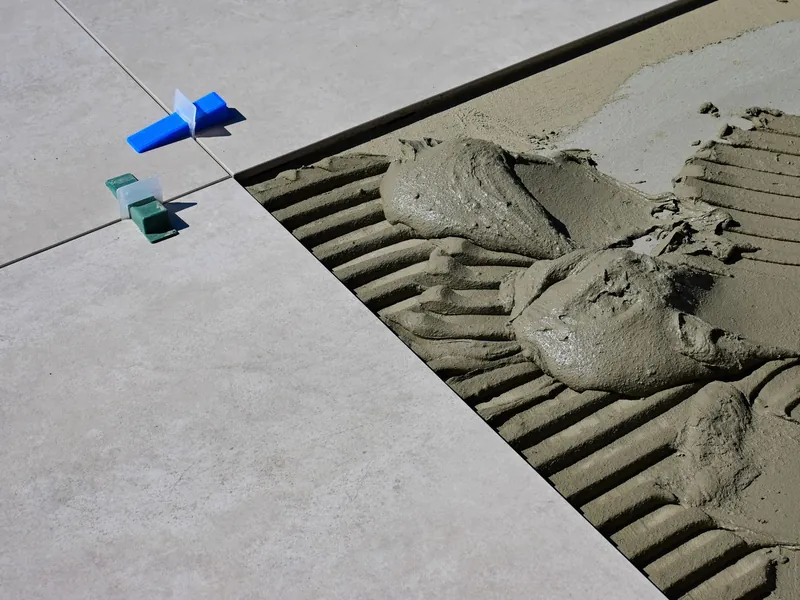
Ceramic or porcelain tiles
- How soon
- Soonest
- Why
- On sand and cement, often after a few weeks with a flexible adhesive. Ask the tiler.
Carpet
- How soon
- Middling
- Why
- It breathes, so it is less fussy. Still let the screed dry.
Laminate and click vinyl
- How soon
- Wait for the test
- Why
- They trap damp under them. The joints swell and lift.
Glued vinyl and LVT
- How soon
- Wait for the test
- Why
- Damp breaks down the adhesive.
Solid and engineered timber
- How soon
- Wait for the test
- Why
- Timber takes up damp, cups and gaps.
The moisture test
Time is only a guide. Before timber, laminate or vinyl goes down, the screed is tested.
- Cement screeds: 75% relative humidity or less. A small insulated box with a hygrometer in it is sealed to the floor and left until the reading settles, usually a few days.
- Calcium sulphate screeds: 0.5% moisture or less by carbide test, and 0.3% over underfloor heating. A sample is taken from the screed and tested on site.
- A pin meter is not a test. It reads the surface and tells you little about the middle of the screed.
Flooring makers ask for the test result in writing before they stand over their guarantee.
Getting it dry sooner
- Air. Open windows on dry days. Moving air carries the damp out.
- A dehumidifier, with the windows closed, from the second week.
- The underfloor heating, run in steps from day 7 on a calcium sulphate screed or day 21 on sand and cement.
- A thinner screed. Liquid screed is laid thinner, so there is less water to lose.
- A fast-drying screed. These are sand and cement screeds with an additive, and cost more.
Read next
 Garage conversion floorsLifting a garage slab to the level of the house, warm and dry.
 Self-build floor screedBoth floors of a new house: when to book it and what has to be finished first.Bathroom and wet room screedScreed laid to a fall of 1 in 80 or steeper, so the water runs to the drain.
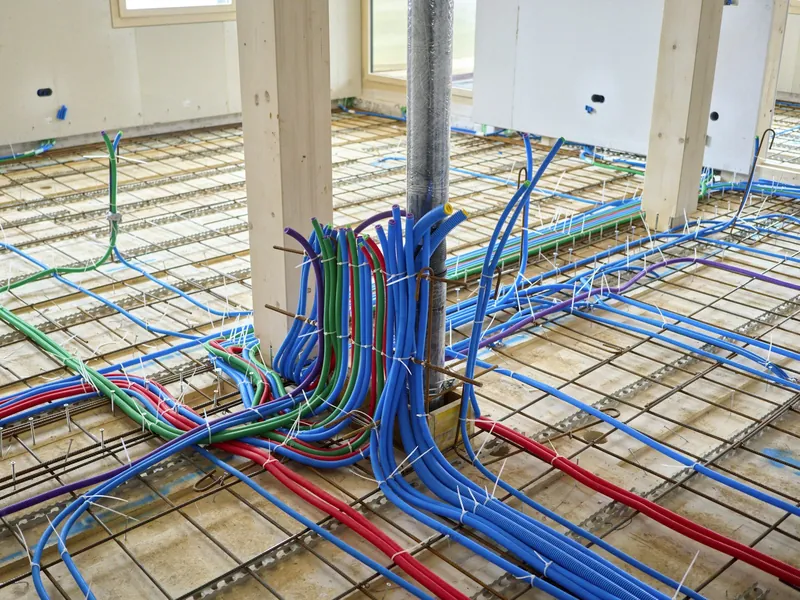 What is under the screedHardcore, radon barrier, slab, insulation, pipes: the layers in an Irish floor.
 How thick, job by jobFrom 25 mm stuck to the slab to 75 mm on insulation. One line per job.
 Sand and cement or liquidWhich one suits a small room, a wet room, heating pipes or a whole house.
Asked before the pour
How long does screed take to dry?
Allow a day for every millimetre for the first 50 mm of sand and cement screed and two days for every millimetre after that. A 65 mm screed needs about 80 days before a floor that minds damp goes on it. Liquid screed dries at a day a millimetre up to 40 mm. You can walk on either after 24 to 48 hours.
How long before I can tile on screed?
Tiles are the least fussy finish. On sand and cement, tilers often start after a few weeks with a flexible adhesive. On a calcium sulphate liquid screed, it is sanded, tested dry and primed first.
How do I know the screed is dry?
By test. A cement screed must read 75% relative humidity or less on a hygrometer box. A calcium sulphate screed must read 0.5% or less by carbide test.
Can I speed up screed drying with heaters?
Not in the first week. Gentle heat and moving air after that help. The underfloor heating, brought up in steps, is the most even way.
What happens if flooring goes down too soon?
The damp in the screed is trapped. Timber cups and gaps, laminate joints swell, and glued vinyl lets go.
Everything on screed.ie
Screed by job
Before and after the pour
See the price before anyone rings
Tap the job, the area and the screed. If the figure suits, a single screeding contractor in your county rings you and prices the floor properly.