How thick screed has to be, job by job
Sand and cement screed is 25 mm at the least when it is stuck to the slab (40 mm is usual), 50 mm on a membrane and 65 mm on insulation in a house. Liquid screed goes thinner: 25 mm stuck down, 30 mm on a membrane, 35 mm on insulation and 25 mm over the top of heating pipes.
One line for each kind of floor, in sand and cement and in liquid.
Free, no obligation. One local screeder prices it, not five.
- 25 mmleast depth, stuck to the slab
- 50 mmsand and cement on a membrane
- 65 mmsand and cement on insulation
- 25 mmliquid screed over heating pipes

The depth for each job
Extension on insulation
- Sand and cement
- 65 mm
- Liquid screed
- 35 mm
Over underfloor heating pipes
- Sand and cement
- 65–75 mm
- Liquid screed
- 25 mm over the pipes, about 50 mm in all
Replaced ground floor on insulation
- Sand and cement
- 65 mm
- Liquid screed
- 35 mm
Garage conversion on insulation
- Sand and cement
- 65 mm
- Liquid screed
- 35 mm
Straight onto a sound old slab
- Sand and cement
- 25 mm least, 40 mm usual
- Liquid screed
- 25 mm
On a damp-proof membrane, no insulation
- Sand and cement
- 50 mm
- Liquid screed
- 30 mm
Wet room laid to falls
- Sand and cement
- 40 mm at the drain, rising to the walls
- Liquid screed
- Not suitable
These are least depths for a house. A drawing from your engineer or architect overrides them.
Price your screed
Four taps and the guide price is on screen. Your name and number come last, and only if you want a local screeder to price the floor properly.
Screed for an extension floor, about 40 m², screed type still open: €880 to €1,440, supplied and laid.
How the price is worked out
It is the area multiplied by our guide rate: €22 to €34 a m² for sand and cement screed supplied and laid, and €24 to €36 a m² for liquid screed poured. One room under 25 m² is not priced by the m², because the pump, the crew and the delivery cost the same for a small floor as for a big one. Insulation, membranes, underfloor heating pipes and any digging out are separate lines. The screeder gives the firm price after seeing the drawings or the floor.
Why depth follows what is underneath
A screed stuck to a concrete slab borrows the slab's strength, so it can be thin. A screed on a membrane has to hold itself together, so it is thicker. A screed on insulation sits on something soft and has to spread the load of furniture and feet without cracking, so it is thicker again.
Liquid screed is stronger in bending than hand-laid sand and cement, which is why its figures are lower in every row.
What an extra 10 mm costs you
- Weight. 10 mm of screed weighs 21–22 kg on every m².
- Drying. Past 50 mm, every extra millimetre of sand and cement adds two days.
- Heat. Over heating pipes, a thicker screed is slower to warm and slower to cool.
- Height. It comes off the insulation or off the room.
Read next
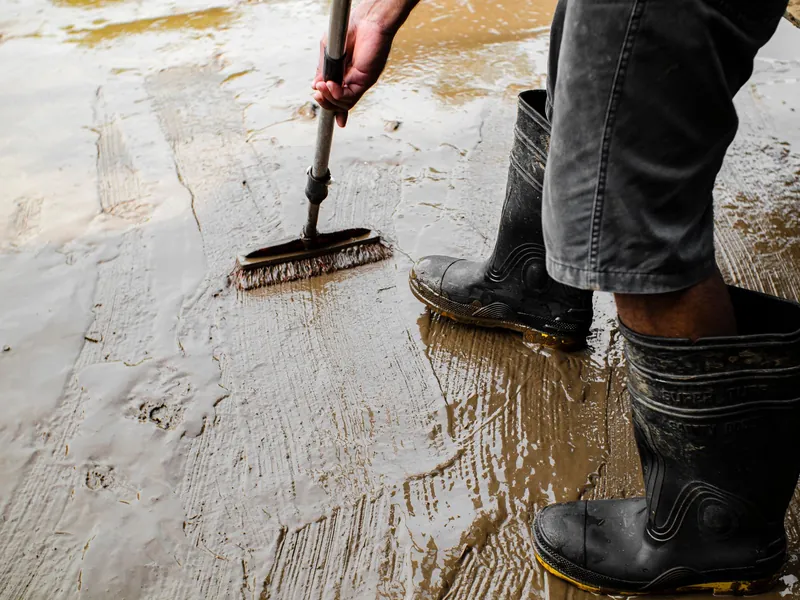 Extension floor screedInsulation, pipes if you want them, then 65 mm of sand and cement or 35 mm of liquid.
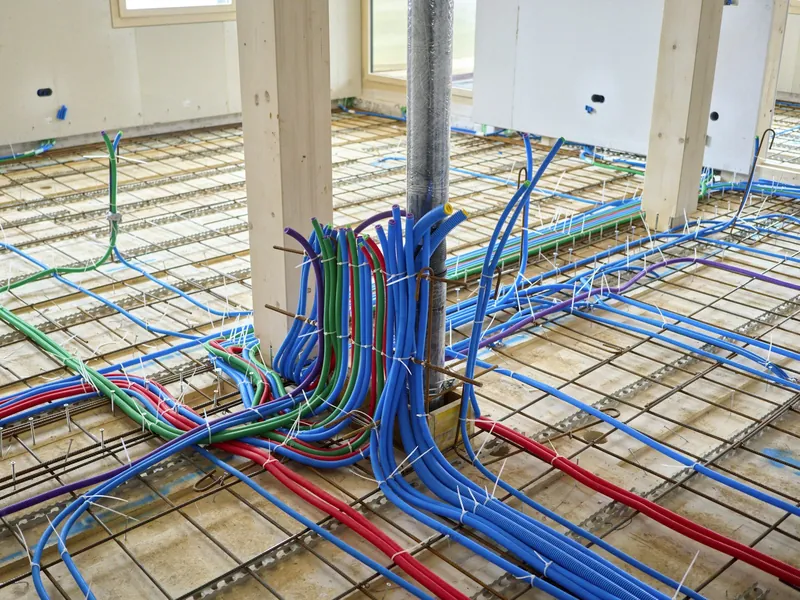 Screed over underfloor heating25 mm over the pipes in liquid screed, and when the heat can go on.
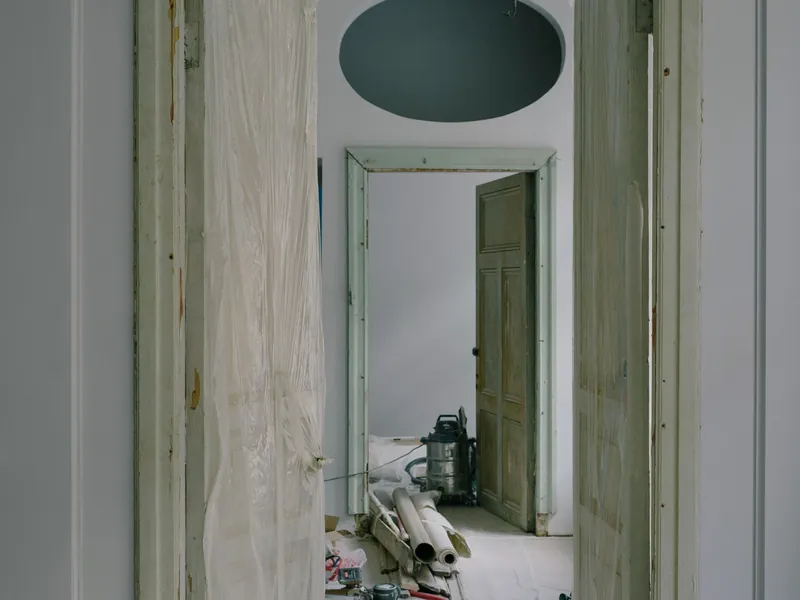 Replacing an old concrete floorDig out, membrane, insulation, then the screed. The order and what each layer costs you in height.
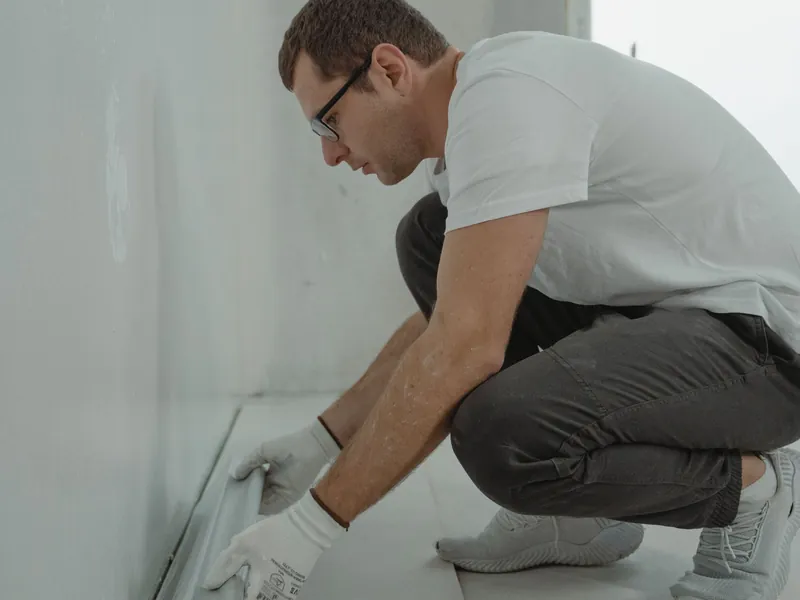 Getting the house readyNine things to have done before the lorry arrives.
 When the floor can go downA day for every millimetre at first. Why a 65 mm screed needs about 11 weeks.Screeding one roomWhy a small floor is not priced by the m², and when bags do the job.
Asked before the pour
What is the minimum thickness of floor screed?
25 mm, for a sand and cement or liquid screed stuck to a prepared concrete slab.
How thick should screed be on insulation?
65 mm of sand and cement in a house, 75 mm where the floor carries more. Liquid screed starts at 35 mm.
Can screed be too thick?
Yes. Sand and cement over about 100 mm is hard to compact and very slow to dry. A deep fill is better made up in insulation or concrete, with a normal screed on top.
Is 50 mm of screed enough?
On a membrane over a slab, yes. On insulation it is enough for liquid screed but not for sand and cement, which needs 65 mm.
Everything on screed.ie
Screed by job
Before and after the pour
See the price before anyone rings
Tap the job, the area and the screed. If the figure suits, a single screeding contractor in your county rings you and prices the floor properly.