Floor screed for a self-build
A new house is screeded once it is roofed, glazed and first-fixed: usually both floors in one or two days. A 110 m² house costs about €2,420–€3,740 in sand and cement or €2,640–€3,960 in liquid screed. Book it early, because the floor finishes cannot go down until it dries: about 80 days for 65 mm of sand and cement.
Both floors of a new house, and where the screed fits in the programme.
Free, no obligation. One local screeder prices it, not five.
- €2,420–€3,740110 m² in sand and cement
- €2,640–€3,960110 m² in liquid screed
- 60 daysdrying at 50 mm of liquid screed
- 5,874one-off houses finished in 2025 (CSO)
Where the screed sits in the build
- Roof on, windows and doors in. The house is weathertight.
- First fix done. Pipes, cables and ducts that cross a floor are in.
- Insulation, membrane and heating pipes down. Pipes pressure tested.
- Screed. A day for most houses.
- Drying. Windows open at first, then the heating run in steps.
- Second fix and floor finishes. After the moisture test passes.
The screed sets the pace for everything after it. Put it on the programme as soon as the roof date is known.
Price your screed
Four taps and the guide price is on screen. Your name and number come last, and only if you want a local screeder to price the floor properly.
Screed for a new house, about 110 m², in liquid screed: €2,640 to €3,960, supplied and laid.
How the price is worked out
It is the area multiplied by our guide rate: €22 to €34 a m² for sand and cement screed supplied and laid, and €24 to €36 a m² for liquid screed poured. One room under 25 m² is not priced by the m², because the pump, the crew and the delivery cost the same for a small floor as for a big one. Insulation, membranes, underfloor heating pipes and any digging out are separate lines. The screeder gives the firm price after seeing the drawings or the floor.
Upstairs as well
On a concrete first floor, such as hollowcore slabs, the screed goes on as it does downstairs, often with underfloor heating in it.
On timber joists, weight is the question. Screed weighs 2,100 to 2,200 kg a cubic metre, so 50 mm of it adds 105–110 kg to every m². The joists have to be designed for that by the engineer. Where they are not, a dry board system carries the heating pipes upstairs.
What to send for a price
- The floor plans, with the area of each floor.
- The floor build-up from the drawings: insulation thickness and screed depth.
- Underfloor heating or not, and on which floors.
- Where a pump or lorry can stand, and how far that is from the door.
- The date the roof goes on.
Read next
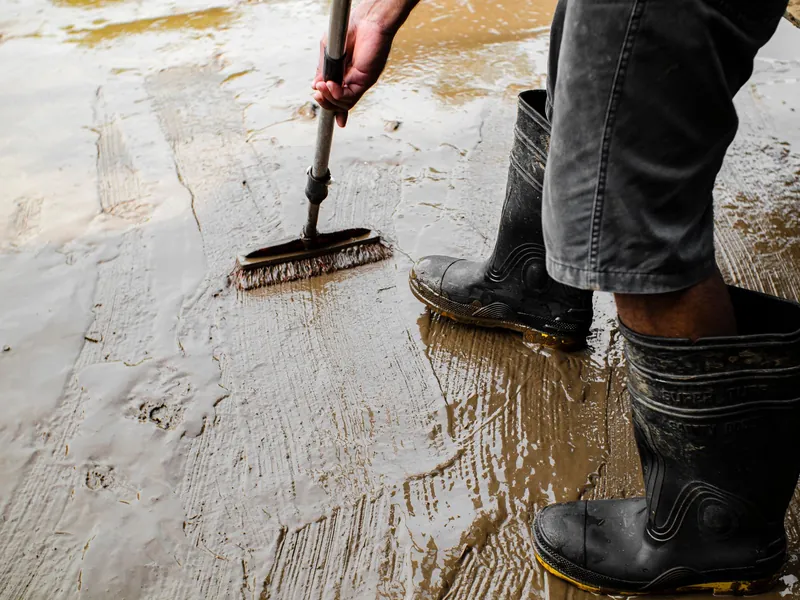
 Bathroom and wet room screedScreed laid to a fall of 1 in 80 or steeper, so the water runs to the drain.
 Extension floor screedInsulation, pipes if you want them, then 65 mm of sand and cement or 35 mm of liquid.
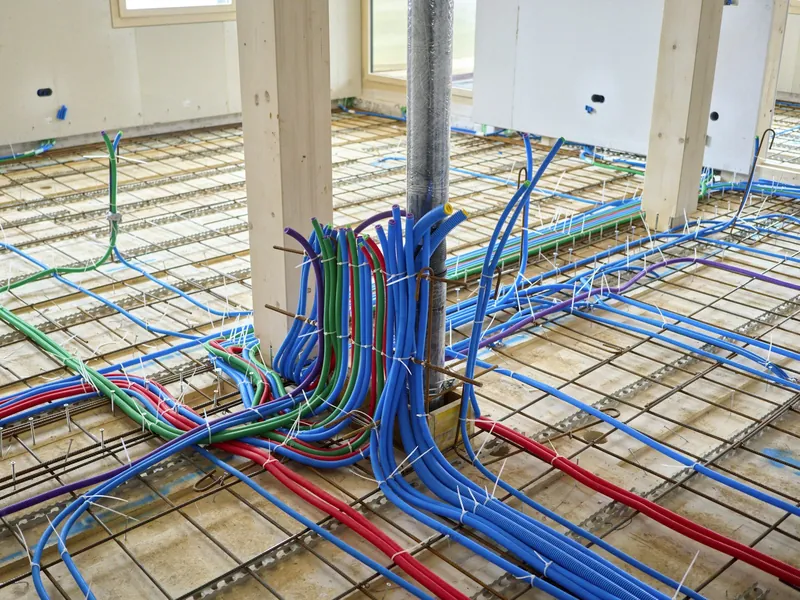 Screed over underfloor heating25 mm over the pipes in liquid screed, and when the heat can go on.
 Screeding one roomWhy a small floor is not priced by the m², and when bags do the job.What is under the screedHardcore, radon barrier, slab, insulation, pipes: the layers in an Irish floor.
 How thick, job by jobFrom 25 mm stuck to the slab to 75 mm on insulation. One line per job.
Asked before the pour
How much does it cost to screed a new house?
About €2,420–€3,740 for 110 m² in sand and cement and €2,640–€3,960 in liquid screed, supplied and laid.
When should I book the screed on a self-build?
When you know the roof date. The screed goes in after first fix, and the floor finishes wait weeks for it to dry, so every week it is late pushes the finish back.
Can screed go on an upstairs timber floor?
Only where the engineer has designed the joists for it. 50 mm of screed adds 105–110 kg to every m².
How long before floors can go down in a new house?
About 60 days for 50 mm of liquid screed and 80 days for 65 mm of sand and cement, in a dry, aired house. Running the heating in steps shortens it.
Everything on screed.ie
Screed by job
Before and after the pour
See the price before anyone rings
Tap the job, the area and the screed. If the figure suits, a single screeding contractor in your county rings you and prices the floor properly.